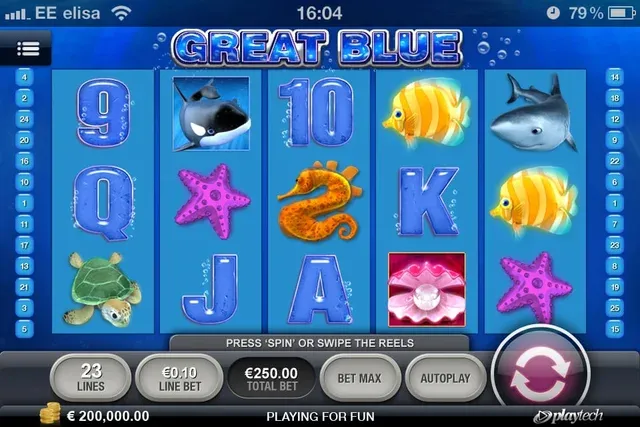





NetEnt slots have one of the deepest recognisable back catalogues in online casino gaming. Starburst, Gonzo’s Quest, Blood Suckers and Dead or Alive each became important for different reasons: one stripped the slot experience down to Expanding Wilds and Respins, another helped popularise Avalanche gameplay, Blood Suckers became a high-RTP reference point, and Dead or Alive established a much more volatile side of the catalogue.
That history still matters in 2026, but it no longer tells the whole story. Modern NetEnt slots such as Spice, Dead or Alive 3: Wanted, Demon Beats, Judgemental and Jack and the Beanstalk 2 use larger grids, persistent multipliers, Colossal Symbols, several bonus states and Elevate options that can modify or directly access features. The gap between classic and modern NetEnt is now large enough that two games from the same provider can look as though they were designed by completely different generations of studios.
This makes NetEnt particularly interesting as a provider page. The catalogue contains extremely simple evergreen games alongside 2026 releases with 10,000x, 15,000x, 20,000x or even 66,666x maximum payouts, yet many of them still reuse ideas the studio introduced years earlier. Avalanche wins, expanding reels, Walking Wilds and feature progression have not disappeared; they have become building blocks for much more complicated games.
NetEnt slots at a glance
The contrast between old and new becomes clearer when representative titles are compared side by side. NetEnt slots now cover everything from ten-payline classics to 6x6 Avalanche games with persistent position multipliers and multi-level feature purchases.
Game | Release | RTP | Hit Frequency | Max Win | Layout | Key Mechanic |
|---|---|---|---|---|---|---|
Blood Suckers | 2009 | 98.00% | 45.00% | 900x | 5x3 | Free Spins & Vampire Slaying Bonus |
Gonzo’s Quest | 2010 | 95.97% | 41.00% | 2,200x | 5x3 | Avalanche & progressive multiplier |
Starburst | 2012 | 96.08% | 23.00% | 800x | 5x3 | Expanding Wild Respins |
Dead or Alive 2 | 2019 | 96.80% | 30.00% | Feature-dependent | 5x3 | Three Free Spins modes |
Starburst Galaxy | 2024 | 96.00% | 24.00% | 17,288x | 5x5 to 7x7 | Avalanche, expanding grid & Elevate |
Gonzo’s Quest II | 2025 | 96.06% | 23.00% | 15,825x | 6x4 to 6x8 | Expanding reels & Colossal Symbols |
Dead or Alive 3: Wanted | 2026 | 96.03% | 22.99% | 66,666x | 5x5 | Wanted Wilds & Bounty Hunters |
Fruit Shop Grand Re-Opening | 2026 | 96.37% | 21.93% | 5,000x | 5x3 to 5x6 | Flavor Meter & expanding bonus grid |
Spice | 2026 | 96.09% | 19.60% | 15,000x | 6x6 | Persistent position multipliers |
Judgemental | 2026 | 96.20% | 22.00% | 15,000x | 5x4 | Judge multipliers & Sticky Respins |
Jack and the Beanstalk 2 | 2026 | – | – | 20,000x | 5x5 | Walking Wild progression |
Demon Beats | 2026 | 96.08% | – | 10,000x | 5x4 | Avalanche, Colossal Symbols & Battle |
The modern catalogue is not simply paying more because max wins have increased. The important change is that a much larger share of each game’s identity now sits in bonus states, persistent grid information, multipliers and alternative feature modes rather than one central Wild or Free Spins mechanic.
Classic NetEnt slots versus the new generation
The simplest way to understand modern NetEnt slots is to divide the catalogue into broad design eras. These categories overlap, but they reveal how the provider moved from fixed paylines and one-feature games toward state-heavy systems in which the reel layout itself can change during play.
Era | Examples | Typical Design Direction |
|---|---|---|
Classic simplicity | Starburst, Blood Suckers | Fixed reels, easy-to-read Wild and bonus features |
Avalanche generation | Gonzo’s Quest | Cascading wins and multiplier progression |
High-volatility generation | Dead or Alive series | Larger value concentrated in bonus states |
Modern franchise sequels | Starburst Galaxy, Gonzo’s Quest II | Old IP rebuilt around expanding grids and feature menus |
2026 generation | Spice, Demon Beats, Judgemental | Persistent multipliers, Super features, Elevate options |
Modern high-potential | Dead or Alive 3: Wanted | Large max win, Sticky multiplier Wilds, premium feature states |
One generation has not replaced another. Starburst is still available beside games released in 2026, which means the same provider catalogue can serve users looking for a straightforward ten-payline slot and users searching for complex feature systems with several selectable game modes.
That coexistence is one of NetEnt’s biggest strengths for evergreen search. Older titles continue generating brand demand, while new releases keep the provider relevant for freshness-driven queries.
Why Starburst is still one of the most important NetEnt slots
Starburst remains one of the most recognisable NetEnt slots because almost nothing about it needs a long explanation. The game uses five reels, three rows and ten paylines, with 96.08% RTP, a 23% hit frequency and an 800x maximum payout.
The entire feature structure revolves around Starburst Wilds. When a Wild lands on an eligible reel, it expands to cover the full reel and triggers a Respin, allowing the expanded reel to remain relevant while another symbol state is generated.
That simplicity now makes Starburst unusual rather than outdated. Many modern slot releases require several paragraphs to explain their base game before reaching Free Spins, while Starburst’s complete identity can be understood almost immediately. Its evergreen appeal comes from clarity rather than feature density.
The 800x maximum payout also demonstrates how much the market has changed. A modern NetEnt game can now reach 15,000x, 20,000x or 66,666x, but Starburst remains one of the provider’s defining titles despite having a much lower ceiling.
That contrast is important because max win is only one component of slot design. A game does not need an extreme payout ceiling to remain relevant if its mechanics and brand identity remain recognisable.
Starburst Galaxy shows how NetEnt modernises a classic
Starburst Galaxy, released in November 2024, is one of the best examples of the old-versus-new split within NetEnt slots. The game retains the Starburst branding and Wild-heavy identity but changes almost everything about how the game develops.
It begins on a 5x5 structure and uses Avalanche wins rather than the original’s simple fixed-spin format. Winning symbols disappear, replacement symbols enter, and the game can eventually expand to a 7x7 grid through the Galaxy Star mechanic.
The maximum payout rises dramatically to 17,288x, while the RTP sits at 96.00% and hit frequency at 24%. That means the sequel’s technical ceiling is more than twenty times larger than the original Starburst maximum even though the RTP remains very close.
The Elevate Feature adds another distinctly modern layer. Several selectable modes can increase feature probability or provide stronger starting conditions, turning the familiar Starburst name into a much more complex mathematical product. Starburst Galaxy therefore demonstrates how modern NetEnt sequels preserve IP while completely rebuilding the game architecture underneath it.
Gonzo’s Quest remains one of NetEnt’s most important mechanical milestones
Gonzo’s Quest was released in 2010 and became important because of the Avalanche mechanic. Instead of ending immediately after a winning combination, contributing symbols disappear and new symbols fall into the empty spaces, potentially producing another win during the same paid round.
The original game publishes 95.97% RTP, a 41% hit frequency and a 2,200x maximum payout. Each consecutive Avalanche also increases a win multiplier, allowing one spin to develop into a longer sequence rather than remaining one static reel evaluation.
That mechanic became one of NetEnt’s most reusable ideas. Avalanche is now present throughout the modern catalogue, including Spice, Demon Beats and numerous other current releases, even though the surrounding games can have completely different layouts and bonus structures.
This is why Gonzo’s Quest remains relevant beyond nostalgia. The game introduced a structural idea that still appears in NetEnt slots sixteen years later.
Gonzo’s Quest II shows what happens when Avalanche is taken much further
Gonzo’s Quest II: Return to El Dorado, released in September 2025, turns the original Avalanche concept into a much larger game system. The slot starts on a six-reel, four-row layout, but every winning Avalanche can add another row until the grid reaches eight rows.
That expansion allows the game to reach up to 262,144 ways to win. The official data lists 96.06% RTP, 23% hit frequency and a 15,825x maximum payout, showing how far the sequel has moved from the 5x3 original.
Colossal Symbols add another layer by appearing as 2x2, 3x3 or 4x4 blocks. Calamity Wilds can then transform large symbol areas and introduce extra Wilds, while Free Spins preserve expanded reel heights between rounds.
Super Free Spins push multiplier progression further depending on the size of the Colossal Scatter involved in the trigger. The result is still recognisably Gonzo because Avalanche remains central, but almost every surrounding mechanic has been enlarged or made persistent.
Gonzo Goes Mental suggests the franchise is still evolving
The NetEnt roadmap already lists Gonzo Goes Mental for an official release on November 26, 2026, with early access scheduled for November 19. Detailed mechanics are not yet fully published, so a current October article should not invent specifications that the provider has not confirmed.
Its presence on the roadmap is still significant. Gonzo has moved from the original Avalanche game to Megaways, live casino adaptations, Gonzo’s Quest II and now another planned slot release.
That makes Gonzo one of the strongest long-term franchise assets in the NetEnt catalogue. The character continues generating fresh branded search demand while the original game remains an evergreen mechanical reference point.
Blood Suckers remains one of the highest-RTP NetEnt slots
Blood Suckers occupies a very different position from Starburst or Gonzo’s Quest. Released in 2009, the game remains notable for its 98.00% RTP, which is exceptionally high compared with many modern online slots.
It uses a 5x3 grid with 25 paylines, a published 45% hit frequency and a relatively modest 900x maximum payout. Free Spins triple qualifying wins, while the separate Vampire Slaying Bonus Game creates an interactive pick-style feature.
Those figures show how differently older NetEnt slots could distribute value. Blood Suckers combines high RTP and high hit frequency with a comparatively low max-win ceiling, while modern NetEnt games often use lower RTP percentages alongside much larger maximum payouts.
That does not make one design objectively better. It shows how differently the same theoretical return can be distributed depending on the game’s volatility and feature structure.
Blood Suckers 2 proves that sequels do not keep the same maths
Blood Suckers 2 has a published RTP of 96.94%, which is still comparatively strong but significantly lower than the original’s 98.00%. Its hit frequency is 41%, and the maximum payout increases to 1,200x.
The sequel adds Blood Rose Free Spins, a Hidden Treasure Bonus Game and random features such as Scatter Shot and Bonus Shot. The visual universe remains recognisable, but the mathematical profile is not copied directly from the first game.
This is another important point when comparing NetEnt slots. A franchise name does not guarantee identical RTP, hit frequency, volatility or max win across sequels.
Each title should be checked independently rather than assuming that a high-RTP classic makes every later game in the series equally high-return.
Dead or Alive represents the high-volatility side of NetEnt
The Dead or Alive series has always occupied a different space from Starburst and Blood Suckers. Its identity is more closely associated with concentrated bonus potential, Sticky Wilds and feature modes capable of producing much larger results than the simple base game suggests.
Dead or Alive 2 expanded that philosophy by giving players three different Free Spins modes. Old Saloon uses Sticky Wilds and a global multiplier, High Noon transforms Wild stacks into multiplier Wilds, while Train Heist builds a multiplier progression bar during the feature.
This multi-feature structure was an early sign of where modern NetEnt was heading. Instead of one generic Free Spins mode, the player could enter several bonus states with different mathematical behaviour.
That idea has now become common across newer NetEnt slots, where Super Free Spins, Elevate options and feature-specific modifiers create several different versions of the same underlying game.
Dead or Alive 3: Wanted is one of NetEnt’s biggest 2026 changes
Dead or Alive 3: Wanted launched on March 26, 2026 and significantly modernised the franchise. It uses a 5x5 grid, publishes 96.03% RTP and a 22.99% hit frequency, and can reach 66,666x the bet.
Wanted Wilds land with multipliers ranging from 2x to 100x. Bounty Hunter Wilds can cover entire reels and collect multiplier values from Wanted Wilds, while adjacent Bounty Hunter Wilds can merge into larger Wild structures.
The Free Spins system also makes Wild persistence central. Wanted Wilds can become Sticky and carry into the feature, while Super Free Spins guarantee Bounty Hunter Wilds on every spin.
The Elevate menu takes the modernisation even further. Bonus Hunter, Wanted Wilds, Bounty Hunter, Hunted Spins and Dead or Alive Spins each provide different enhanced states at different costs. Dead or Alive 3 is therefore not merely a sequel with a larger max win; it turns the franchise into a multi-mode feature system.
Its 66,666x ceiling also places it in a completely different max-win category from Starburst, Blood Suckers or the original Gonzo’s Quest. That spread inside one provider catalogue shows how broad NetEnt’s mathematical range has become.
Spice is one of the clearest examples of modern NetEnt design
Spice launched on July 23, 2026 and uses a 6x6 grid with up to 15,625 ways to win. The game publishes 96.09% RTP, a 19.60% hit frequency and a maximum payout of 15,000x.
The central mechanic is still Avalanche, but the modern layer sits above it. Every winning position receives a multiplier beginning at 2x, and that multiplier doubles whenever the same position participates in another win during the same Avalanche chain.
That means the grid records where wins happened. Spice turns individual reel positions into persistent mathematical assets rather than treating every Avalanche as a completely fresh screen.
The Feature Lane adds Bombs, Row Converters, 9-Square Converters, Random Wilds and Locked Wilds. These features can drop into the grid when a normal Avalanche sequence stalls, potentially restarting or improving the chain.
Free Spins preserve position multipliers between spins rather than resetting them after each Avalanche sequence. Super Free Spins strengthen the feature further, while additional +3 symbols can extend the bonus.
This combination of persistent grid multipliers, Feature Lane modifiers and several bonus levels makes Spice one of the clearest examples of how far modern NetEnt slots have moved from the Starburst formula.
Spice also shows how NetEnt’s Elevate system works
Modern NetEnt games increasingly use Elevate Feature options instead of one simple Bonus Buy button. Spice offers five distinct enhanced modes, each changing a different part of the game.
Bonus Hunt costs 3x the bet and increases the chance of activating Free Spins. Base Multiplier Layer costs 10x and begins the round with multipliers already applied across the grid, while a 50x version combines the multiplier layer with increased Scatter probability.
Free Spins can be accessed for 100x, while Super Free Spins cost 500x. These are not five prices for the same feature; they create different starting states and probability conditions.
That distinction matters when comparing modern NetEnt slots. Feature purchase is increasingly becoming a menu of alternative game modes rather than a single shortcut to Free Spins.
Judgemental builds an entire game around multiplier judges
Judgemental launched on August 13, 2026 with 96.20% RTP, 22% hit frequency and a 15,000x maximum payout. The game uses a 5x4 layout and places one Judge above each reel.
Each Judge can hold a multiplier or Re-Spin sign. When Judge symbols activate several multiplier Judges at once, their values are added into a global multiplier that applies to qualifying wins.
Bribe symbols can further increase active Judge multipliers, while the Applause feature can add Wilds and activate Judges when a reel becomes fully Wild. Tomato symbols create another transformation mechanic by moving through reels and replacing symbols along their path.
Free Spins preserve active Judges, and Super Free Spins begin with all Judges already active. Judgemental therefore makes the feature state above the reels just as important as the symbols on the grid itself.
This is another pattern visible across new NetEnt slots: more of the game’s mathematical information now persists outside the immediate reel positions.
Fruit Shop Grand Re-Opening turns a classic theme into a progression game
Fruit Shop Grand Re-Opening arrived on July 2, 2026 and takes one of NetEnt’s familiar fruit-game identities into a much deeper structure. The official data lists 96.37% RTP, 21.93% hit frequency and a 5,000x maximum payout.
The base layout begins at 5x3 but can expand during Bonus Spins. Three Fruit Bonus symbols trigger Backyard Spins on 5x3, four trigger Garden Spins on 5x4, while five trigger Orchard Spins on a larger grid.
The most important new mechanic is the Flavor Meter. Winning combinations move the meter through a series of milestones that can unlock multipliers, Sticky Wilds, extra rows, Mystery Drop prizes and permanent symbol upgrades for the remainder of the feature.
Jumper Wilds can accelerate progression by moving the meter several steps at once. The game therefore turns a classic fruit-slot concept into a persistent progression system where each win can improve future spins rather than simply paying once and disappearing.
Its Elevate menu also offers Bonus Hunt, guaranteed Fruit Wins and direct access to the three bonus tiers. Again, the pattern is clear: modern NetEnt slots increasingly allow several entry points into a more complicated feature system.
Jack and the Beanstalk 2 rebuilds another classic NetEnt franchise
Jack and the Beanstalk 2 launched on September 17, 2026 and moves the familiar franchise into a new 5x5 format with a 20,000x maximum win. The sequel retains Walking Wilds as a core part of its identity but expands their behaviour through different Wild levels and progression states.
Walking Wilds can appear on reels 2–5 as single symbols or stacked structures depending on their level. As they move across the grid through Respins, their size and feature interactions can create much larger coverage than the classic format.
This is another example of how NetEnt is handling its evergreen catalogue. The provider is not simply re-releasing old games with new graphics; it is taking one recognisable mechanic from the original and building a much larger modern feature system around it.
That approach mirrors Starburst Galaxy and Gonzo’s Quest II. The IP stays familiar enough to capture evergreen search demand, but the mathematical structure is updated for a market where players increasingly expect persistent progression, multiple bonus states and higher win ceilings.
Demon Beats is the newest full NetEnt release as of October 23
Demon Beats officially launched on October 15, 2026, making it the newest fully released NetEnt slot at the time of this article. The game has a 5x4 layout, 96.08% RTP, high volatility and a maximum payout of 10,000x.
Its core gameplay combines Avalanche wins with Colossal Symbols, expanding Wilds, escalating multipliers and a Battle Feature. The base multiplier runs through values from 1x to 32x and increases when wins or exploding Colossal Symbols occur.
During Free Spins, the multiplier scale becomes much more aggressive, reaching values as high as 1,024x. Colossal symbols can also interact with Wilds, while the Battle Feature creates another game state when specific symbols land after a non-winning round.
Wild symbols expand across entire reels, and repeated Wild interactions can add their own multipliers. Demon Beats therefore combines several older NetEnt ideas – Avalanche, expanding Wilds and multipliers – inside a much more layered 2026 framework.
Demon Beats also shows how complex NetEnt’s feature menus have become
Demon Beats includes six Elevate options, which is much more elaborate than the one-button feature buys associated with earlier slot generations. Bonus Hunt costs 2x and doubles the probability of Free Spins or Super Free Spins, while Bonus Hunt Extreme costs 10x and increases that probability further.
Multiplier Upgrade costs 25x and guarantees the upgraded multiplier set. Battle Feature costs 50x and guarantees a Battle symbol on the first spin, while Free Spins and Super Free Spins cost 100x and 300x respectively.
This creates a meaningful distinction between enhanced base play and direct feature access. Some options modify the probability or starting conditions of a normal round, while others guarantee entry to a feature.
That is a recurring trait of modern NetEnt slots. The bet menu itself has become part of the game design rather than simply a way to choose stake size.
Nunchucks is the next confirmed October release
As of October 23, Nunchucks is already available through Playin Exclusive access, but its official wider release is scheduled for October 29, 2026. That means it should be treated as an upcoming full release rather than described as already globally live.
The distinction matters for a page targeting NetEnt slots in 2026 because freshness depends on exact release status. An article can mention Nunchucks as confirmed upcoming content without filling in technical specifications that have not yet been published in the final live game profile.
The same roadmap also lists Mexican Standoff for November 12 and Gonzo Goes Mental for November 26. NetEnt’s late-2026 calendar therefore continues beyond Demon Beats rather than ending with October’s current catalogue.
Avalanche is still one of NetEnt’s defining mechanics
One of the most interesting things about modern NetEnt slots is how often Avalanche remains relevant. Gonzo’s Quest introduced the mechanic in 2010, but Spice and Demon Beats still use it as the foundation for completely new feature systems sixteen years later.
The basic process has not changed dramatically. Winning symbols disappear, new symbols fall into the empty positions and the game evaluates the grid again within the same paid round.
What has changed is everything attached to that sequence. Spice records position multipliers, Demon Beats escalates global multipliers and interacts with Colossal Symbols, while Gonzo’s Quest II physically expands the grid after each successful Avalanche.
Avalanche is therefore less a single feature now and more a reusable engine on which NetEnt builds different forms of progression.
NetEnt has moved from one feature to persistent game states
Classic NetEnt slots often had one dominant feature. Starburst had Expanding Wild Respins, Gonzo’s Quest had Avalanche and a growing multiplier, while Blood Suckers combined Free Spins with a separate bonus game.
Modern releases frequently contain information that survives longer than one immediate win. Spice keeps position multipliers, Fruit Shop Grand Re-Opening advances a Flavor Meter, Judgemental keeps Judges active, and Dead or Alive 3 carries Sticky Wanted Wilds into Free Spins.
That persistence changes how the game feels. A previous event can improve the mathematical state of a later spin rather than every round resetting completely.
This is one of the clearest differences between classic NetEnt and the 2026 catalogue. Modern games are increasingly about building a state rather than simply waiting for one trigger.
Feature Buy and Elevate are now central to modern NetEnt slots
The provider’s current catalogue frequently uses Elevate Feature menus, which can contain Bonus Hunt modes, guaranteed modifiers, direct Free Spins access and Super Free Spins.
The exact options vary considerably by title. Spice has five Elevate choices, Demon Beats has six, Dead or Alive 3 uses several modes built around Wanted and Bounty Hunter Wilds, while Gonzo’s Quest II offers enhanced Calamity states and direct access to its strongest Free Spins version.
These options should not all be described as generic Bonus Buy. Some change feature probability while keeping the base game active, while others enter a bonus directly or guarantee a stronger starting condition.
Availability can also vary by market. A feature can exist in the official NetEnt game design but be unavailable under a specific operator or regulatory configuration.
NetEnt RTP ranges from unusually high classics to mainstream modern levels
One of the strongest reasons to compare NetEnt slots individually is the wide spread in published RTP. Blood Suckers remains at 98.00%, Jackpot 6000 can reach 98.90%, while several newer games sit closer to 96%.
Starburst publishes 96.08%, Dead or Alive 3 has 96.03%, Spice 96.09%, Demon Beats 96.08%, Judgemental 96.20% and Fruit Shop Grand Re-Opening 96.37%.
Those figures reveal a broad shift in the catalogue. Some classic NetEnt games remain unusually high-RTP by modern standards, while recent releases generally combine mid-96% theoretical return with substantially higher max-win ceilings and deeper features.
That does not mean the classics are automatically “better.” RTP describes long-run theoretical return, while volatility, feature structure and max win determine how that return is distributed.
Blood Suckers proves RTP and max win are completely different statistics
Blood Suckers is perhaps the best example in the catalogue. Its 98% RTP is significantly higher than Dead or Alive 3’s 96.03%, yet its max win is only 900x compared with 66,666x.
The higher-RTP game therefore has the dramatically lower payout ceiling. That is perfectly possible because RTP describes average theoretical value across all outcomes, while max win describes only the largest permitted result.
This distinction is essential when discussing NetEnt slots. The game with the highest max win is not necessarily the game with the highest theoretical return, and the highest-RTP game is not necessarily the one with the most dramatic bonus potential.
A complete comparison should therefore show both statistics rather than ranking titles by one headline number.
Hit frequency also varies widely between classic and modern NetEnt slots
Blood Suckers publishes a 45% hit frequency, while Gonzo’s Quest sits at 41%. Starburst is much lower at 23%, and modern games such as Spice, Judgemental and Dead or Alive 3 sit around the low-20% range.
Those figures do not directly measure volatility. A qualifying hit can still return less than the stake, and a game with frequent small wins can reserve substantial value for rare bonus outcomes.
Still, hit frequency is useful when comparing how often the mathematical model produces a payout event. It helps explain why two NetEnt slots with similar RTP can feel very different during ordinary spins.
The statistic should therefore be read alongside RTP, volatility and max win rather than used as a standalone “chance to win” percentage.
Max wins have increased dramatically across the NetEnt catalogue
The change in headline payout potential is one of the clearest differences between generations. Starburst tops out at 800x and Blood Suckers at 900x, while modern titles regularly reach five figures.
Starburst Galaxy reaches 17,288x, Gonzo’s Quest II 15,825x, Spice and Judgemental 15,000x, Jack and the Beanstalk 2 20,000x and Dead or Alive 3 reaches 66,666x.
This escalation reflects a broader market trend toward high-potential feature states. Modern NetEnt slots allocate room for much larger rare outcomes than many of the provider’s early classics.
However, the max-win number still needs context. A 66,666x ceiling does not mean that outcome is common, and it tells nothing about RTP or hit frequency by itself.
Why classic NetEnt slots still matter in 2026
It would be easy to treat old games as historical curiosities now that the provider is releasing much more complex titles. That would miss why Starburst, Gonzo’s Quest and Blood Suckers remain visible years after release.
Each classic represents a clear mechanic or mathematical profile that users continue to search for. Starburst is still a reference point for Expanding Wilds, Gonzo’s Quest remains closely associated with Avalanche, and Blood Suckers continues to appear in high-RTP comparisons.
They also provide context for newer releases. Starburst Galaxy is more interesting when compared with Starburst, Gonzo’s Quest II makes more sense in the context of the original Avalanche system, and Dead or Alive 3 is easier to evaluate when the series’ volatility history is understood.
Evergreen and fresh search intent therefore reinforce each other rather than compete.
NetEnt is increasingly rebuilding classic IP instead of abandoning it
One of the clearest strategic patterns is the return of established characters and game families. Starburst became Starburst Galaxy, Gonzo returned through Gonzo’s Quest II and is scheduled to return again in Gonzo Goes Mental, Dead or Alive reached a third major instalment, Fruit Shop received a Grand Re-Opening and Jack and the Beanstalk gained a 2026 sequel.
This approach gives new releases an existing search base. A completely original title has to build brand demand from zero, while a sequel can immediately attract comparisons such as Starburst vs Starburst Galaxy, Gonzo’s Quest vs Gonzo’s Quest II or Dead or Alive 2 vs Dead or Alive 3.
For SEO, that means the strongest NetEnt structure is not one “best games” list but a network of provider pages, mechanic explainers and sequel comparisons.
The brand’s long history gives it unusually strong material for that kind of topical cluster.
What to compare before choosing between NetEnt slots
The variety of the catalogue means one statistic cannot meaningfully rank every title. A classic 5x3 slot and a modern expanding-grid game are designed around very different experiences.
The most useful comparison points are:
- RTP. Blood Suckers and Jackpot 6000 sit unusually high, while many recent games are closer to 96%.
- Hit frequency. This shows how often qualifying wins occur but does not measure their size.
- Max win. Modern releases can reach far higher ceilings than classic titles.
- Grid structure. NetEnt now uses fixed 5x3 layouts, expanding grids, 6x6 systems and variable-way structures.
- Avalanche or Respin mechanics. These determine whether a paid round can develop through several symbol states.
- Persistent features. Position multipliers, active Judges, Sticky Wilds and meters can carry progress forward.
- Feature Buy or Elevate options. New releases increasingly offer several enhanced states rather than one Bonus Buy.
- Bonus modes. Free Spins and Super Free Spins can use materially different mathematics.
- Franchise version. A sequel can have very different RTP, max win and mechanics from the original.
Reading these factors together provides a much more useful picture than asking which NetEnt slot has the biggest max win.
Which NetEnt slots best represent the catalogue in 2026?
For classic NetEnt, Starburst, Gonzo’s Quest and Blood Suckers remain essential because each represents a different part of the provider’s history. Dead or Alive also deserves inclusion because it established the high-volatility branch that later sequels expanded substantially.
For the modern catalogue, Dead or Alive 3: Wanted, Spice and Demon Beats are particularly important. Dead or Alive 3 shows the extreme max-win side of the current portfolio, Spice demonstrates persistent grid multipliers and complex Elevate modes, while Demon Beats shows how Avalanche, Colossal Symbols and expanding Wilds can be combined in one 2026 release.
Starburst Galaxy and Gonzo’s Quest II sit between those eras. They use famous classic IP but rebuild the mechanics around modern grid expansion, feature menus and much larger payout ceilings.
Taken together, these games explain modern NetEnt better than any one title can. The provider is now defined as much by the contrast between generations as by one signature mechanic.
What is changing in NetEnt slots in 2026?
The clearest trend is not simply bigger max wins. It is the move from isolated features toward interconnected systems that preserve information across several game states.
Spice remembers multiplier positions. Judgemental remembers active Judges. Fruit Shop Grand Re-Opening progresses through a persistent meter. Dead or Alive 3 carries Wilds into Free Spins, while Demon Beats builds and resets different multiplier layers depending on what happens during Avalanche sequences.
The second trend is feature choice. Elevate menus increasingly allow players to enhance feature probability, start with stronger conditions or directly enter Free Spins and Super Free Spins where those options are permitted.
The third trend is franchise reuse. NetEnt is returning to Starburst, Gonzo, Dead or Alive, Fruit Shop and Jack and the Beanstalk rather than relying only on completely new IP.
The result is a catalogue that still feels historically NetEnt, but is mathematically far more complex than the provider’s classic reputation suggests.
FAQ
What are the most famous NetEnt slots?
Starburst, Gonzo’s Quest, Blood Suckers and Dead or Alive remain among the most recognisable NetEnt slots. Each became known for a different reason: Starburst for Expanding Wild Respins, Gonzo’s Quest for Avalanche wins, Blood Suckers for its unusually high RTP and Dead or Alive for more volatile bonus-focused gameplay. Their sequels and spin-offs continue to connect the classic catalogue with modern releases.
What are the newest NetEnt slots in 2026?
Recent 2026 releases include Dead or Alive 3: Wanted, Fruit Shop Grand Re-Opening, Spice, Judgemental, Aftermath, Jack and the Beanstalk 2 and Demon Beats. Demon Beats officially launched on October 15 and is the newest full release as of October 23. Nunchucks has an official release scheduled for October 29.
What is the RTP of Starburst?
Starburst has a published RTP of 96.08%. NetEnt also publishes a 23% hit frequency and an 800x maximum payout for the game. Its Expanding Wild Respins remain the central feature rather than a larger Free Spins system.
What is the RTP of Blood Suckers?
The original Blood Suckers has a published RTP of 98.00% and a 45% hit frequency. Its maximum payout is 900x, showing that unusually high RTP does not require a huge max-win ceiling. Blood Suckers 2 has a different mathematical profile and a lower published RTP of 96.94%.
What is the RTP of Spice?
Spice has a published RTP of 96.09%. It also lists a 19.60% hit frequency and a maximum payout of 15,000x. The game uses a 6x6 grid, Avalanche wins, persistent position multipliers and a Feature Lane containing several modifiers.
What is the max win in Spice?
Spice has a published maximum payout of 15,000x the bet. Its high-end potential is built around position multipliers that can increase through repeated Avalanche wins and remain active between spins during Free Spins. Super Free Spins and Elevate modes create additional feature states.
What is the max win in Dead or Alive 3: Wanted?
Dead or Alive 3: Wanted has a published maximum payout of 66,666x the bet. The game uses Wanted Wild multipliers, full-reel Bounty Hunter Wilds and Sticky Wild behaviour during Free Spins. Its RTP is 96.03% and its hit frequency is 22.99%.
Which NetEnt slot has the highest RTP?
Among the well-known titles discussed here, Jackpot 6000 can reach 98.90% RTP, while Blood Suckers publishes 98.00%. Many modern NetEnt releases sit closer to the 96% range. The highest RTP therefore belongs to older, simpler titles rather than necessarily to the games with the largest max wins.
Is Gonzo’s Quest still relevant in 2026?
Yes. Gonzo’s Quest remains important both as an evergreen slot and as the game most closely associated with NetEnt’s Avalanche mechanic. The franchise now includes Gonzo’s Quest Megaways, Gonzo’s Quest II: Return to El Dorado and an upcoming Gonzo Goes Mental release scheduled for November 2026.
What is Avalanche in NetEnt slots?
Avalanche removes symbols involved in a win and allows replacement symbols to fall into the empty positions. The game then checks the new layout for another win within the same paid round. Modern NetEnt slots can combine Avalanche with position multipliers, expanding grids, Colossal Symbols and other persistent mechanics.
Are new NetEnt slots similar to Starburst?
Not necessarily. Starburst is a compact 5x3, ten-payline game with one major Expanding Wild mechanic, while newer NetEnt slots can use 6x6 grids, expanding reels, several bonus modes and feature-purchase menus. The difference between Starburst and Spice or Demon Beats is substantial despite all belonging to the same provider.
Does NetEnt offer Bonus Buy?
Many modern NetEnt slots support feature-purchase or Elevate Feature options where permitted. These can include Bonus Hunt modes, guaranteed modifiers, direct Free Spins and stronger Super Free Spins states. The exact options and availability vary by title and regulatory market.
What is the Elevate Feature in NetEnt slots?
Elevate is a menu of enhanced game modes used in many recent NetEnt releases. One option may increase feature probability, another can guarantee a particular modifier, and another can provide direct access to Free Spins or Super Free Spins. It is therefore broader than one conventional Bonus Buy button.
Are classic NetEnt slots higher RTP than new NetEnt slots?
Some are. Blood Suckers at 98.00% and Jackpot 6000 at up to 98.90% sit well above many modern releases around 96%. However, this is not a universal rule across the entire classic catalogue, and RTP should always be checked for the exact title.
Why do new NetEnt slots have much higher max wins?
Modern games increasingly place more mathematical potential inside persistent multipliers, Super bonus states, expanded grids and rare high-end feature combinations. This gives developers room for larger technical ceilings such as 15,000x, 20,000x or 66,666x. A larger max win does not automatically mean a higher RTP or a more frequent large payout.
Is Nunchucks already released?
As of October 23, 2026, Nunchucks has entered Playin Exclusive access but its wider official NetEnt release is scheduled for October 29, 2026. It should therefore be treated as upcoming for the full catalogue rather than described as already globally released.

 LinkedIn